Baseball requires more equipment than many sports. From bats and gloves to helmets, batting gloves, footwear, uniforms, water bottles, and personal accessories, players can quickly find themselves carrying a substantial amount of gear to practices, tournaments, and games.
That is why choosing the right baseball equipment bag is more important than simply finding something large enough to hold everything.
A well-designed baseball backpack can help players stay organized, protect their equipment, travel comfortably, and arrive at the field ready to focus on the game.
For youth leagues, travel teams, baseball academies, schools, sporting-goods companies, and private-label brands, customized baseball backpacks can also strengthen team identity.
Baseball Players Need Better Equipment Organization
Organization is an important part of any successful baseball program.
Youth-sports platforms such as SportsEngine provide tools specifically designed to help baseball organizations manage rosters, schedules, teams, communication, and league operations.
The same organizational thinking should apply to player equipment.
A baseball player may need to transport:
- Baseball bats
- Fielding gloves
- Batting gloves
- Batting helmets
- Cleats or training shoes
- Protective equipment
- Uniforms
- Water bottles
- Towels
- Personal accessories
Putting everything into one large general-purpose bag can make equipment difficult to find.
A baseball-specific backpack provides dedicated storage areas so players know where each piece of equipment belongs.
What Should You Look for in a Baseball Backpack?
When teams or individual players choose an equipment bag, several features deserve particular attention.
1. Multiple Storage Compartments
A good baseball backpack should provide enough separation to organize different types of equipment.
Instead of placing gloves, clothing, personal items, and accessories together, multiple compartments allow players to create a consistent storage routine.
This becomes especially valuable during tournaments when players may have only a short period between games.
Being able to locate equipment immediately means less time searching through bags and more time preparing to play.
2. Dedicated Baseball Bat Storage
Baseball bats are difficult to carry inside ordinary backpacks because of their length.
Dedicated side bat sleeves allow players to securely transport their bats while keeping their hands free.
For players walking between parking areas, practice facilities, dugouts, batting cages, and tournament fields, this is a major practical advantage.
3. Comfortable Shoulder Straps
Baseball equipment can become heavy very quickly.
Padded and adjustable shoulder straps can help distribute weight across both shoulders, making it easier to carry equipment over longer distances.
A comfortable backpack becomes particularly important for youth players and tournament athletes who may carry equipment around a sports complex throughout the day.
4. Durable Materials and Construction
Baseball bags are regularly exposed to demanding conditions.
They may be:
- Placed on dugout floors
- Hung against fences
- Packed into buses and vehicles
- Used in dusty or muddy environments
- Opened and closed repeatedly
- Transported between multiple fields
For that reason, buyers should evaluate materials, zippers, stitching, reinforcement points, webbing, handles, and overall construction quality.
Baseball Equipment Is Part of the Complete Training Environment
A player’s equipment bag does not directly improve batting average or pitching velocity, but organization supports the larger environment in which players train.
Resources such as Topend Sports’ baseball section illustrate how baseball development involves much more than simply playing games. Training, conditioning, preparation, and sport-specific equipment all contribute to the athlete’s overall experience.
Similarly, Elite Baseball Performance provides resources covering baseball skill development, physical performance, and player preparation.
One of the recurring principles in athletic development is consistency.
When players consistently prepare their equipment, arrive with everything they need, and maintain organized routines, coaches can spend more time developing players instead of solving avoidable equipment problems.
Why Custom Baseball Backpacks Make Sense for Teams
For an individual player, a standard retail baseball bag may be sufficient.
Organizations buying equipment for an entire roster often have different requirements.
A travel baseball organization, academy, school, distributor, or sports brand might require:
- Specific team colors
- Customized logos
- Player names
- Jersey numbers
- Private-label branding
- Different sizes
- Custom materials
- Special pocket configurations
- Custom packaging
That is where custom manufacturing becomes valuable.
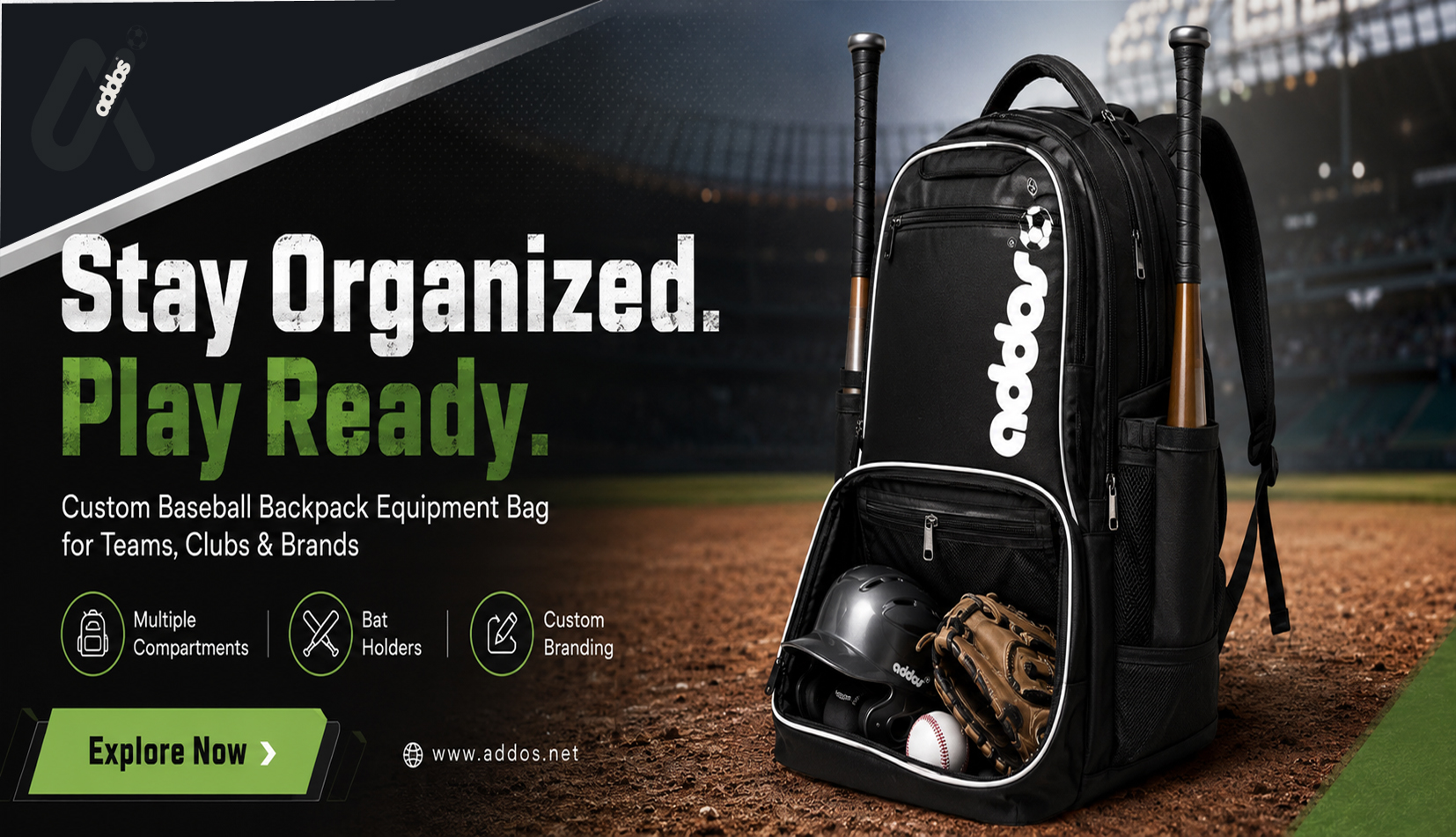
For example, Addos offers a custom baseball backpack equipment bag designed specifically for baseball equipment.
The design includes multiple storage compartments and dedicated side bat holders, while customization allows buyers to develop a product that matches their team, organization, or brand.
Instead of adapting a team’s identity to an existing retail backpack, buyers can create equipment around their own specifications.
Team Identity Matters in Baseball
Baseball has a particularly strong team culture.
Uniforms, caps, team colors, logos, and equipment all contribute to the identity players develop around their organization.
Major baseball media networks such as FanSided’s MLB coverage demonstrate how strongly baseball supporters identify with individual clubs, players, colors, traditions, and baseball communities.
That sense of identity also exists at the youth and amateur levels.
When every player arrives carrying matching customized equipment bags, the team can present a more coordinated and professional image.
Customized backpacks can feature:
- Team logos
- Player names
- Player numbers
- School branding
- Sponsor logos
- Academy branding
- Custom Pantone colors
For large organizations, personalization also provides a functional benefit.
When dozens of similar backpacks are placed together in a dugout or training facility, player names and numbers make identifying individual bags much easier.
Baseball Is Increasingly Driven by Preparation
Modern baseball increasingly emphasizes preparation, analysis, player development, and specialized training.
Baseball publications such as Pitcher List regularly examine player performance, pitching development, training techniques, statistics, and the finer details influencing results on the field.
Likewise, baseball writers on platforms such as Medium frequently explore coaching, analytics, player development, baseball technology, and team-building ideas.
The lesson for players at every level is simple: preparation matters.
Players cannot control everything that happens during a game, but they can control whether they arrive prepared.
Having an organized equipment backpack is one small part of establishing that professional routine.
Tournament Baseball Makes Good Equipment Storage Even More Important
Travel baseball can create particularly demanding equipment requirements.
Players might arrive early in the morning and remain at a sports complex for most of the day.
Depending on tournament schedules, they may need to move from one field to another several times.
Equipment may need to be transported between:
- Hotels
- Vehicles
- Parking areas
- Practice areas
- Batting cages
- Dugouts
- Multiple baseball fields
A baseball backpack makes this easier because the equipment stays together and can be carried on the player’s back.
Instead of carrying a duffle bag in one hand and bats in another, integrated bat storage helps create a more convenient travel system.
Baseball Media Shows How Deep the Sport’s Culture Has Become
Baseball is supported by an enormous ecosystem of athletes, coaches, analysts, journalists, parents, organizations, and fans.
For example, Last Word on Baseball publishes ongoing MLB news, analysis, team coverage, and long-form baseball content.
Publications like these demonstrate that baseball is more than a competition played during nine innings.
There is an entire culture surrounding preparation, player development, statistics, equipment, coaching, team management, and performance.
Equipment manufacturers serving this market therefore need to understand how baseball players actually use their products.
A backpack intended for baseball should be designed around baseball—not simply adapted from a generic school or travel backpack.
Choosing Baseball Bags for Youth Players
Youth organizations have additional considerations when selecting baseball equipment backpacks.
Select the Correct Size
A backpack designed for an adult athlete may be too large for a young baseball player.
Organizations covering several age groups should consider kids, youth, and adult sizing options.
Make Player Identification Easy
Youth tournaments sometimes involve hundreds of athletes carrying similar equipment.
Adding player names or jersey numbers can dramatically reduce confusion.
Prioritize Practical Features
A visually attractive backpack is useful only when it performs properly.
Teams should evaluate:
- Bat holders
- Storage compartments
- Zipper quality
- Shoulder padding
- Fabric durability
- Reinforcement
- Pocket accessibility
- Overall dimensions
Think About Future Team Orders
Growing baseball organizations may need to order additional backpacks when new players join.
Working with a manufacturer capable of reproducing colors, logos, materials, and specifications can help maintain a consistent team identity from season to season.
Why OEM and Private-Label Manufacturing Can Be Valuable
Sports brands and distributors face slightly different challenges from individual baseball teams.
Instead of simply putting a club logo on an existing bag, they may want to develop an entire product line.
OEM and private-label production can provide control over:
- Materials
- Backpack dimensions
- Compartment structure
- Fabric colors
- Logo placement
- Embroidery
- Printing
- Labels
- Packaging
- Product specifications
A custom sports bag manufacturer can therefore help buyers transform an initial concept into a finished commercial product.
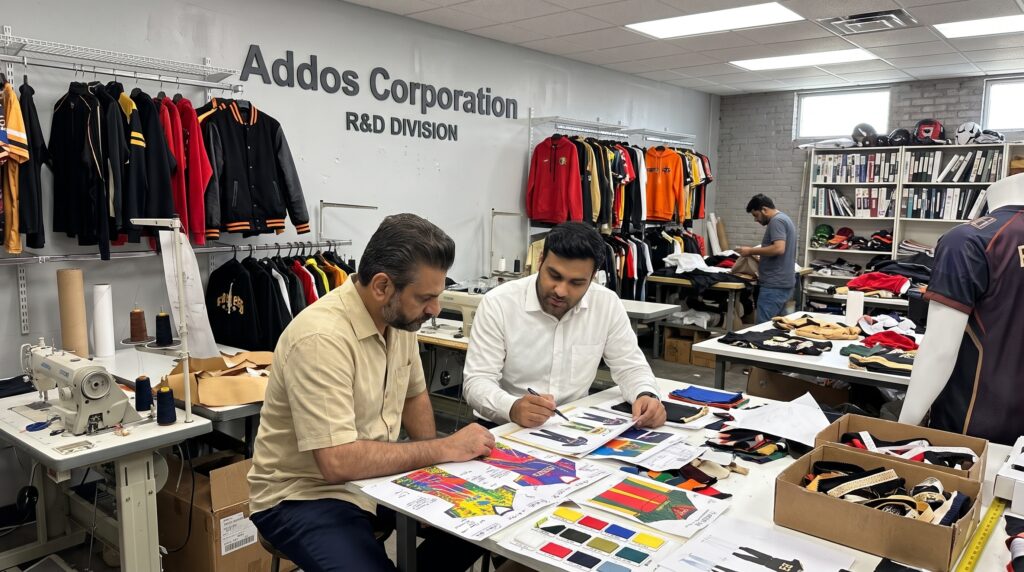
Addos specializes in custom sports bags and related products for teams, organizations, brands, wholesalers, distributors, and private-label customers.
Questions to Ask a Baseball Bag Manufacturer
Before placing a bulk order, buyers should discuss the technical details of the product.
Useful questions include:
- What materials can be used?
- Can the fabric colors be matched to Pantone references?
- What logo methods are available?
- Can player names and numbers be customized?
- How many baseball bats can the backpack carry?
- Are separate footwear compartments available?
- What sizes can be manufactured?
- What is the minimum order quantity?
- Can a prototype or sample be produced?
- How long does bulk production normally take?
- What quality-control procedures are used?
- Can customized packaging and private labels be produced?
A sample is particularly valuable for custom manufacturing.
It allows buyers to examine dimensions, fabrics, colors, stitching, compartments, logo placement, comfort, and overall construction before approving mass production.
Good Equipment Supports Better Baseball Experiences
Strong baseball programs depend on much more than equipment.
They depend on quality coaching, player development, teamwork, communication, organization, physical preparation, and consistent practice.
But good equipment can support all of those areas.
An organized baseball backpack gives players a reliable place to keep their gear and makes transportation easier throughout practices, games, and tournaments.
Resources from organizations such as SportsEngine, performance-focused publications like Elite Baseball Performance, sports-information sites including Topend Sports, baseball communities such as Pitcher List, MLB media including FanSided, independent baseball journalism from Last Word on Baseball, and baseball writers publishing through Medium all illustrate the depth of information and preparation surrounding today’s game.
For teams, schools, academies, and sports brands, the equipment players carry can become another part of that professional approach.